Format reference · Commercial compatible

DST Embroidery File Format Guide

DST (Tajima DST) is one of the most widely supported embroidery formats in commercial production. It stores basic stitch data as coordinate sequences and is accepted by most industrial and commercial embroidery machines, making it a reliable choice for professional orders.

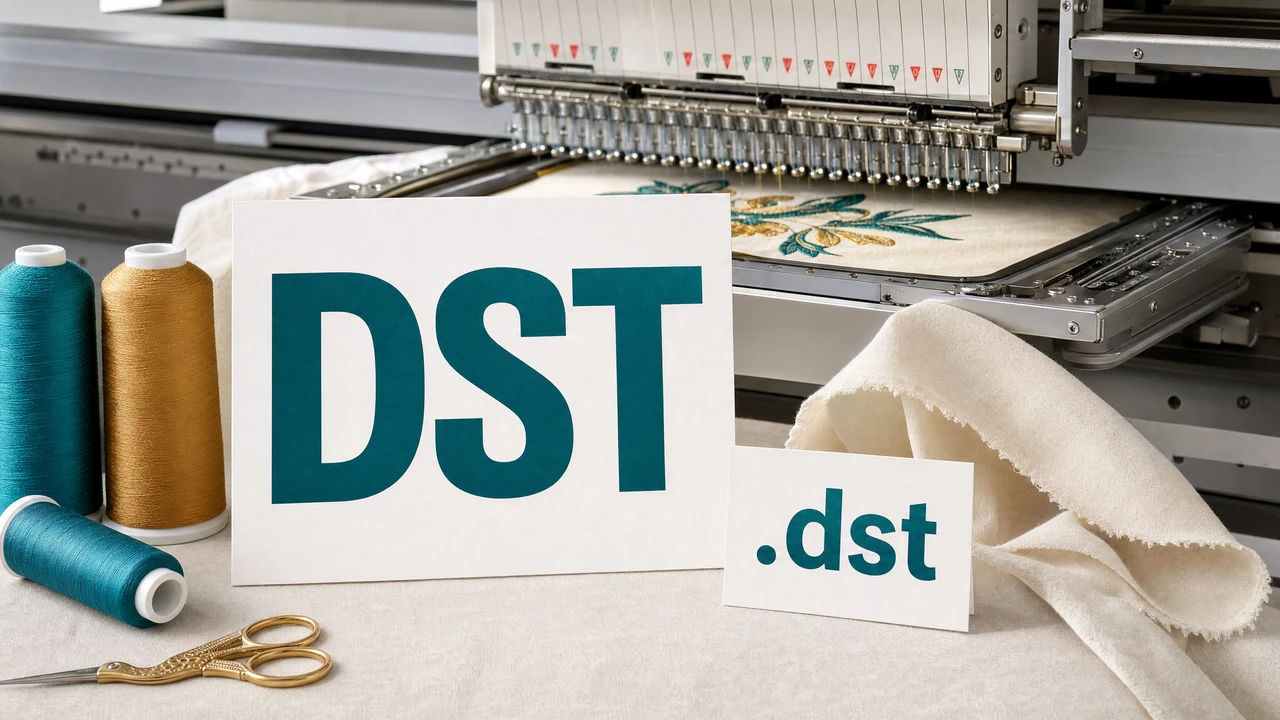
DST embroidery file format reference and commercial workflow overview
DST format reference and commercial workflow overview in StitchPilot.ai.

Working with DST files

01

Understand DST's structure

DST stores stitch coordinates and color-change markers, but does not embed thread color names or brand codes. Color information must be communicated separately — typically via a color sequence sheet included with your order.

02

Prepare a color reference sheet

Since DST lacks embedded color metadata, create a numbered list of thread colors in the sequence they appear in the design. Use thread brand codes (Madeira, Isacord, or Robison-Anton) for consistent results at commercial shops.

03

Convert artwork to DST

Use StitchPilot.ai to convert PNG, JPG, SVG, WebP, or logo artwork into DST format. Review the stitch preview to verify color change points and overall stitch structure before exporting.

04

Test or deliver with documentation

For commercial orders, send the DST file alongside your color sheet and any sizing or placement notes. For in-house use, run a test stitch on scrap fabric before final production.

About DST

The commercial embroidery standard

DST was developed by Tajima Industries for their commercial embroidery systems. It uses a simple binary structure with stitch-on, stitch-off, and jump commands. Its widespread support makes it the de facto standard for commercial embroidery production.

  • Developed by Tajima Industries for commercial systems
  • Stores stitch coordinates and color-change markers
  • Color names and thread brands are not embedded in the file
  • Supported by most industrial embroidery machines worldwide

Commercial workflow

Ordering embroidery with DST

When placing an embroidery order with a commercial shop, DST is often the preferred or required format. Always ask your vendor about their preferred format and provide a color sequence sheet specifying thread colors by number.

  • Include a color sequence list with every DST order
  • Specify thread brand and color codes (e.g., Madeira, Isacord)
  • Confirm hoop size and placement with your production contact
  • Keep a copy of the source artwork for future re-exports

DST format — common questions

What does DST stand for?

DST stands for Data Stitch Tajima. It is a binary embroidery format originally developed by Tajima Industries, one of the largest commercial embroidery machine manufacturers.

Does DST store thread color information?

DST files record color-change stop points but do not embed thread color names or brand codes. You must communicate color information separately, typically through a numbered color sequence sheet.

Which machines support DST?

DST is supported by most commercial and industrial embroidery machines including Tajima, Barudan, ZSK, and SWF systems. Many consumer machines can also read DST files, either natively or with firmware support.

Can I convert a photo or logo to DST?

Yes. StitchPilot.ai can convert image files such as PNG, JPG, SVG, and WebP into DST format using AI-assisted digitizing. Review the stitch preview before downloading.

What should I include when sending a DST file to a commercial shop?

Include the DST file, a numbered color sequence list with thread brand and code references, and any sizing, placement, or fabric notes relevant to your order.
Ready to get started?

Convert your artwork to DST with StitchPilot.ai

Upload a PNG, JPG, SVG, or WebP file, review the stitch preview, and export a DST file ready for commercial embroidery production.

Start converting →